
Pied stilt poaka
Status: Not Threatened
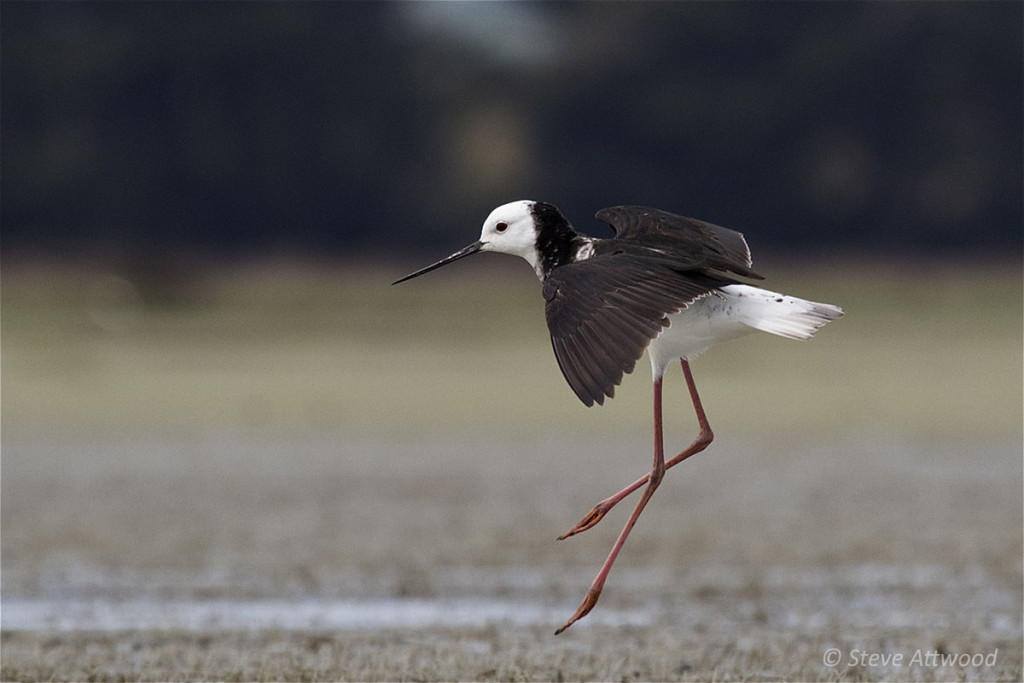
The pied stilt poaka is often seen with other wading birds, particularly with the critically endangered black stilt kakī and South Island pied oystercatcher tōrea.
Lowland birds start moving towards their breeding sites along braided rivers June-July each year.
Inland birds start later in August-October.
Description
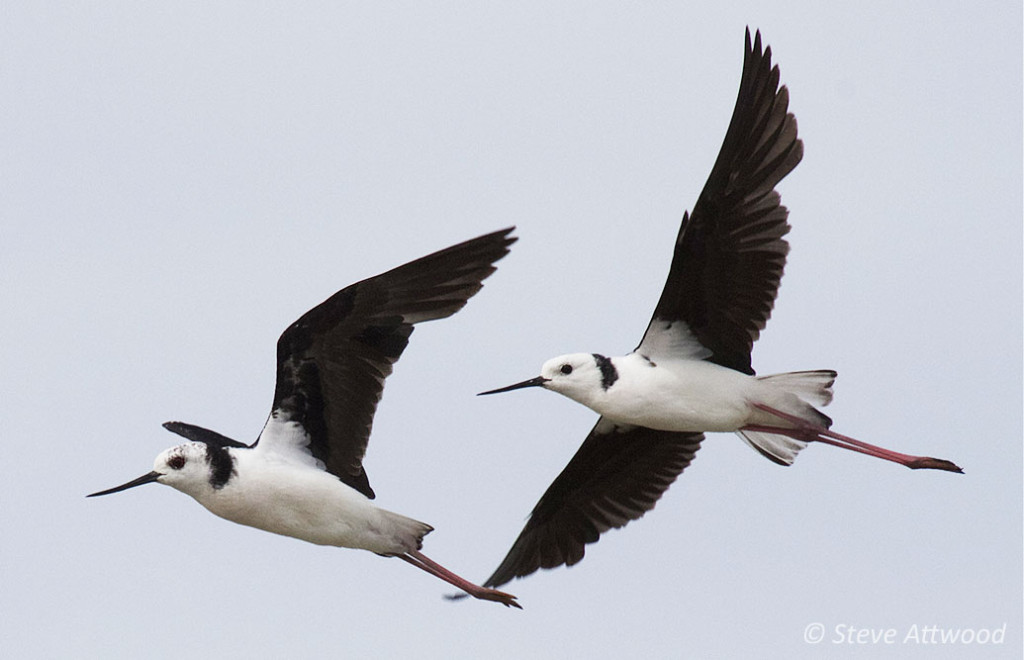
Believed to have arrived in New Zealand in the early 1800s, the pied stilt (Himantopus leucocephalus) poaka (Māori) measures 35cm and weighs 190gm. Occasionally a single pair will nest alone, but usually they breed in colonies. They will breed with black stilt kakī, producing hybrids.
A compact, black-and-white stilt with long red legs and a long fine pointed black bill. Adult hybrid stilts have a black band of variable width across the breast. This can sometimes lead them to be mistaken for black stilt kakī juveniles.
Their eggs are khaki-coloured with dark brown blotches.
More information
- NZ Birds online (includes photos, sounds)
- NZ Birds
- iNaturalist
- iNaturalist: hybrids
Conservation efforts
While they are a protected species and their overall numbers are declining, there is some concern around their breeding with kakī | black stilt, creating hybrids. While hybridisation can be regarded as a rapid form of adaptation under changing environmental conditions, this may not be the case with pied-stilt | poaka. See the research below or information on black stilt kakī on this website.
References and research
- See also Ecology/further information and references
- 2019: Galla et al; Reference Genomes from Distantly Related Species Can Be Used for Discovery of Single Nucleotide Polymorphisms to Inform Conservation Management Genes 2019, 10 (1), 9
- 2019: See also Genes Special Issue “Conservation Genetics and Genomics“
- 2017: Forsdick; Genome analysis of hybridisation between Kakī (Black Stilt) and Poaka (Pied Stilt) (BRaid seminar)
- 2011: Hagen et al; Conservation Genetic Management of A Critically Endangered New Zealand Endemic Bird: Minimizing Inbreeding In The Black Stilt (Himantopus novaezelandiae). The International Journal of Avian Science 153(3):556-561
- 2008: Steeves et al; Development of Polymorphic Microsatellite Markers For The New Zealand Black Stilt (Himantopus novaezelandiae) and Cross-Amplification In The Pied Stilt (Himantopus himantopus leucocephalus). Molecular Ecology Resources 8(5):1105-110
- 2005: Cameron et al; Improving predator capture rates: analysis of river margin trap site data in the Waitaki Basin, New Zealand New Zealand Journal of Ecology (open access PDF)
- 2002: Sanders & Maloney; Causes of Mortality At Nests of Ground-Nesting Birds In The Upper Waitaki Basin, South Island, New Zealand: A 5-Year Video Study. Biological Conservation 106(2):225-236
- 2001: Maloney & Murray; Kaki (Black Stilt) Recovery Plan 2001–2011. Department of Conservation, Wellington.
- 1999: Wallis; Genetic status of New Zealand black stilt (Himantopus novaezelandiae) and impact of hybridisation (DOC technical report)
- 1997: Millar et al; Captive Management and Molecular Sexing of Endangered Avian Species: An Application To The Black Stilt Himantopus novaezelandiae and Hybrids. Biological Conservation 82(1):81-86
- 1996: Pierce; Ecology and Management of The Black Stilt Himantopus novaezelandiae. Bird Conservation International 6(01):81-88.
- 1986: Pierce; Foraging responses of stilts (Himantopus spp.: Aves) to changes in behaviour and abundance of their riverbed prey New Zealand Journal of Marine and Freshwater Research
- 1986: Pierce; Differences in Susceptibility to Predation Between Pied and Black Stilts (Himantopus spp.). Auk 103(2): 273-280.
- 1984: Pierce; Plumage, Morphology and Hybridization of New Zealand Stilts Himantopus spp. Notornis 31(1): 106-130.
- 1982: Pierce; Comparative Ecological Study of the Pied and Black Stilts in South Canterbury. PhD thesis. University of Otago, Dunedin, New Zealand