
Crack willow
What does it look like?
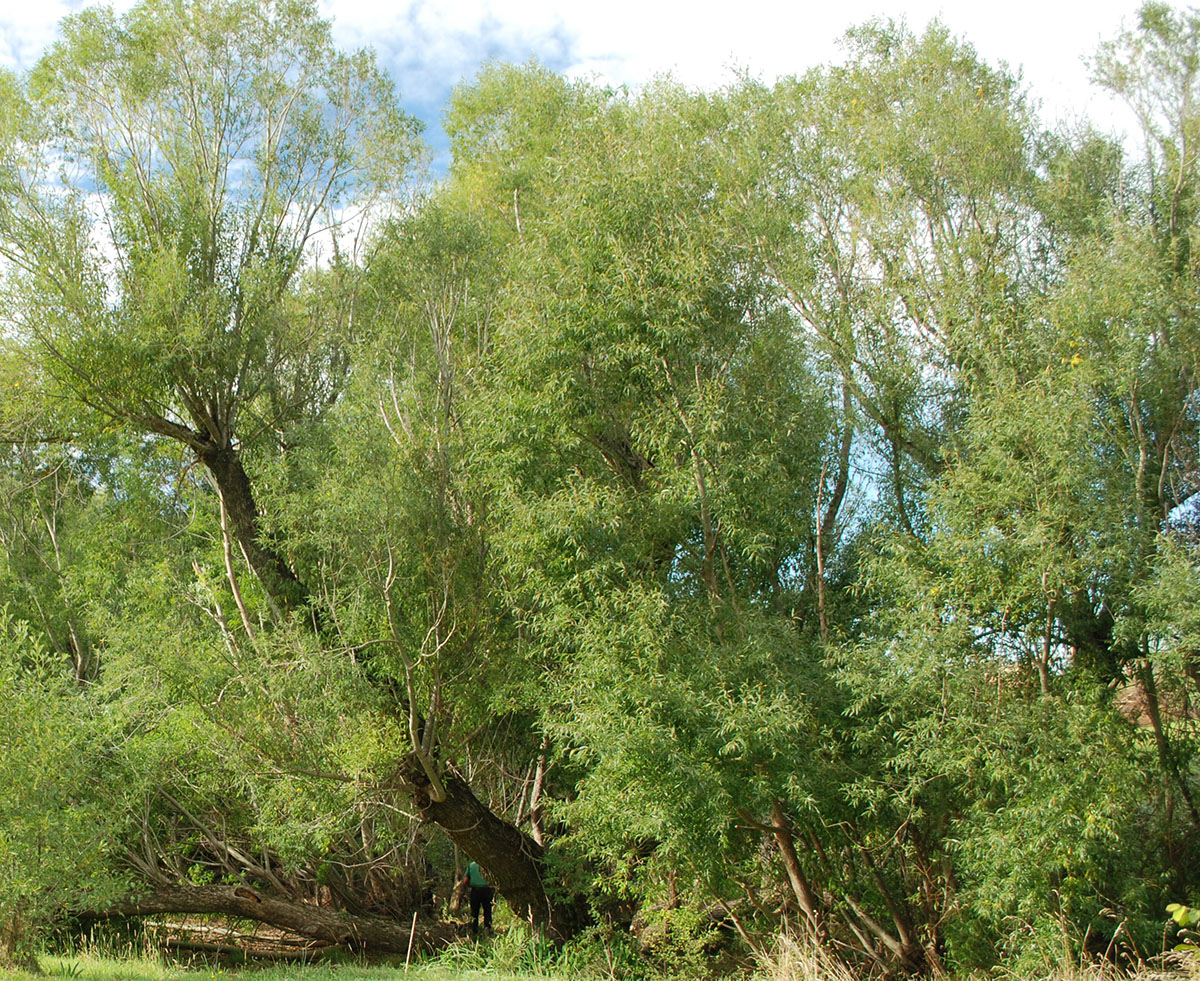
Crack willow (Salix fragilis) is a deciduous tree that can grow up to 25 m tall. While their branches don’t droop like weeping willows, they break off easily with an audible ‘crack’. The leaves are narrow and lance-shaped, often with bright red swellings on them. They flower around the same time as the leaves re-appear in Spring. The yellow-green flowers are up to 7.5cm long and 1cm across. No fruit is formed as there are only male plants in New Zealand. The roots form dense mats. See also:
Why is it a problem?
Willows have been extensively planted in NewZealand as shelter belts, for stock fodder, to prevent soil erosion, and along river and streambanks (riparian zones) to manage watercourses. They are now the second most common exotic tree after radiata pine.
- Even the smallest stem fragments can take root anywhere that’s damp, and are readily spread downstream
- Root suckers spread locally
- Cut stumps regrow rapidly
- Grows rapidly, creating dense thickets
- Very tolerant of flooding, can grow in a wide range of temperatures and in semi-shaded areas
- Quickly replaces native species along waterways and forms vast dense (often pure, ie excluding all other plants) stands along channels
- Stabilises braided river gravels, preventing the natural re-shaping of channels during freshes, changing the entire structure and flow of waterways and creating an environment completely unsuited to endemic species
- Absorbs so much water that river levels can drop and disappear altogether in places
Conservation activities
So many rivers are choked with crack and grey willow that the focus has been on removing willows just in the fairway of the river rather than the banks. See Weedbusters for more information.
If you are looking to control willows:
Poisoning method
See Weedbusters
Non-poisoning method
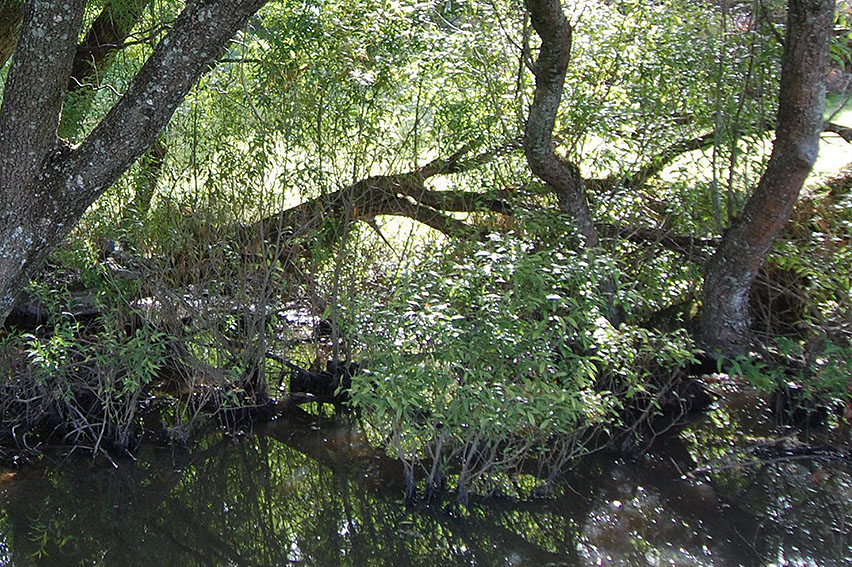
The photos on this page were along a waterway on my lifestyle block. All living crack- and grey willow trees were cut down and bulldozed into fire pits and later burned. I then tied or nailed thick sheets of black plastic over stumps to prevent re-growth. Surprisingly, this worked. Sheep like the salicylic acid in the bark and leaves of the willow and poplar trees, so grazing them on afflicted areas for 3 years prevented re-growth.
Willow twigs and branches periodically wash down in storms. These need to be manually removed from within the lake and edges of waterways once there is any sign (sprouts) that they are trying to take root.
Where is it found?
See iNaturalist and select ‘map’. or for Canterbury, click on the map below.

