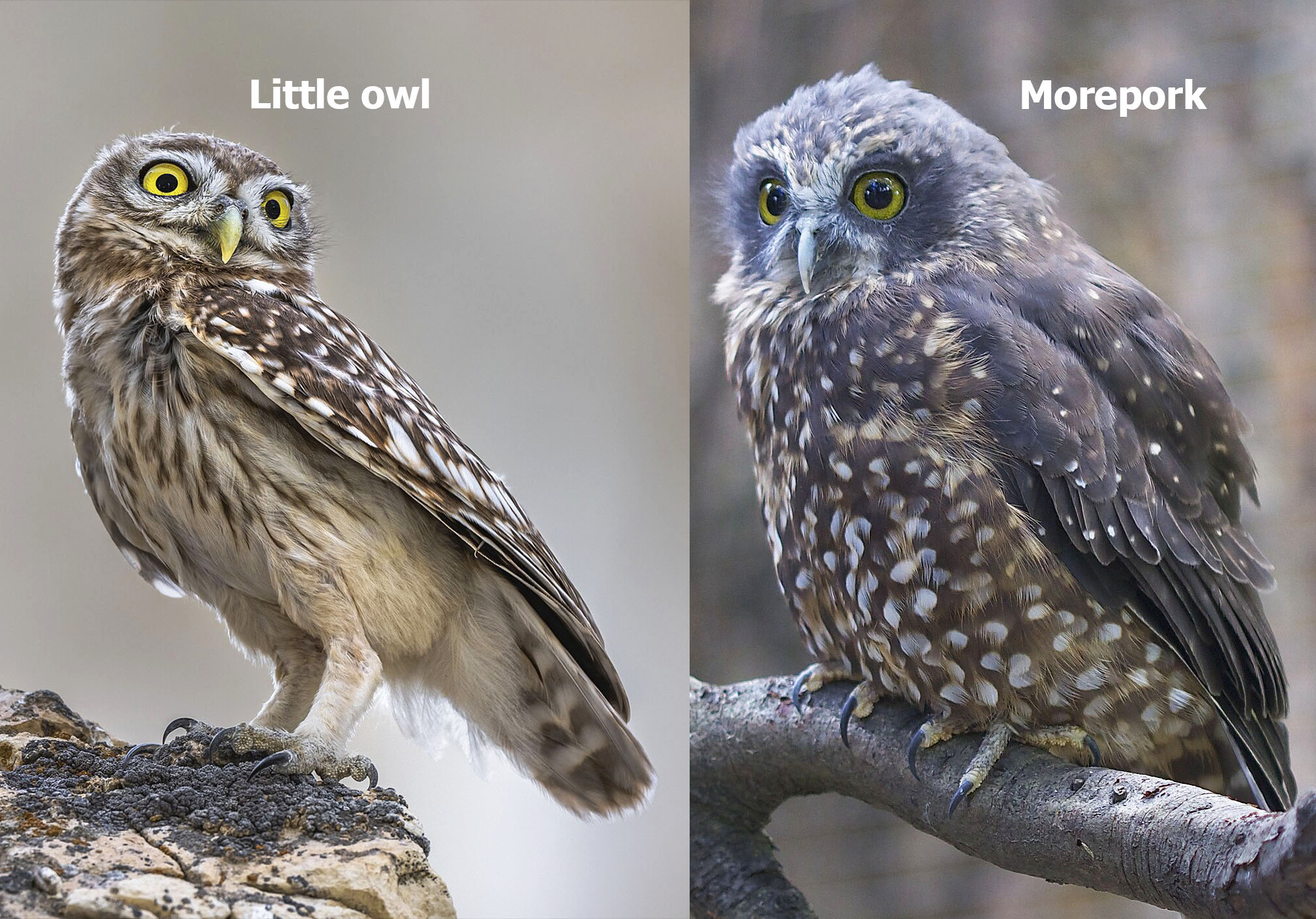
Little owl / German owl / Ruru nohinohi
Why is it a problem?
Native to Eurasia, the Middle East and North Africa, the little owl was introduced from Germany to Aotearoa New Zealand in the early twentieth century to control previously introduced small bird species that were damaging grain and fruit crops. While that wasn’t effective, recent evidence shows the contrary.
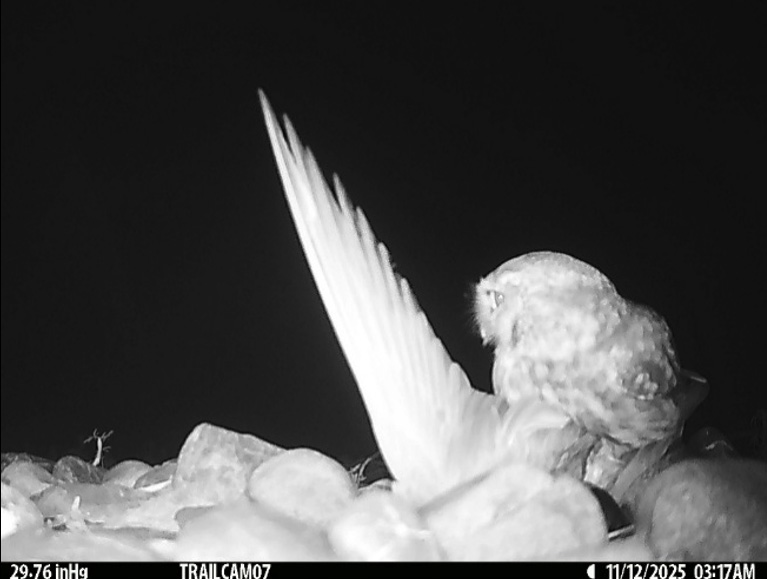
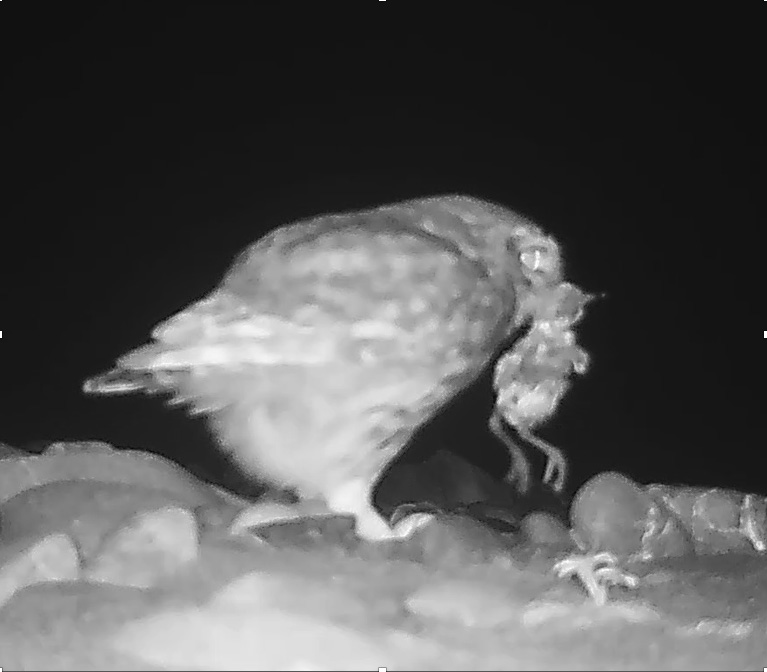
In the 2025 – 2026 braided river bird nesting season on the Ashley Rakahuri, trail camera photos and videos by the Ashley Rakahuri Rivercare Group showed a little owl taking a wrybill ngutu pare chick and egg. One ore more little owls killed and ate at least three endangered black-fronted term tarapirohe adults, eggs and chicks and caused the abandonment of a 50-nest colony. (Black-fronted terns often abandon nests due to predator disturbance). No other predators were detected from trail cameras or caught in traps.
A characteristic feeding behaviour (Garbutt & Jensen 1942) confirmed on the Ashley Rakahuri this year of the victim’s head being eaten before the body suggests that another black-fronted tern colony was destroyed by a little owl in 2020.
Description
A small owl about 23ck long and weighing 180grams, the feathers of the little owl (Athene noctua) are mottled or streaky grey-brown with white spots on the head and body. Pale grey facial discs both sides of their face just below bright yellow eyes. Prominent white bands above the eyes and below thechin. The legs have thick pale to white feathering all the way down to the pale yellow-grey toes.
Widespread throughout the drier open country of the eastern and northern South Island, unlike the morepork, they are often seen perched out in the open during the day.
Call: visit NZ Birds Online to hear a range of call sounds and additional photographs. NOTE: their website states that little owls are ‘not considered a significant threat as a predator to any native bird species.’ New evidence is contrary to that.
Conservation activities
None as their impact on endangered endemic species has only recently been observed and only on one river. This raises the same issues mentioned in the predator’s overview page; elsewhere, little owls may predate on more troubling predators such as rats.
More information
- NZ Birds online
- Wingspan
- Braided Rivers Conference 2026: The little/German owl—another braided river bird predator
- Garbutt, R. and Jensen, N. (2026). Ruru Nohinoho / Little Owl (Athene Noctua) at the South Island Wildlife Hospital. The Wrybill, vol. 28 no. 1
- Marples, B.J, (1942). A study of the little owl, Athene Noctua, in New Zealand. Royal Society of New Zealand
Important: Do not attempt to control little owls / ruru nohinohi. They are partially protected under Schedule 2 of the Wildlife Act 1953. They can easily be mistaken for the fully protected endemic ruru /morepork. Please record any behaviour, ideally with photographs or vidoes, and contact your local DOC office.