
Tree lupin
What does it look like?
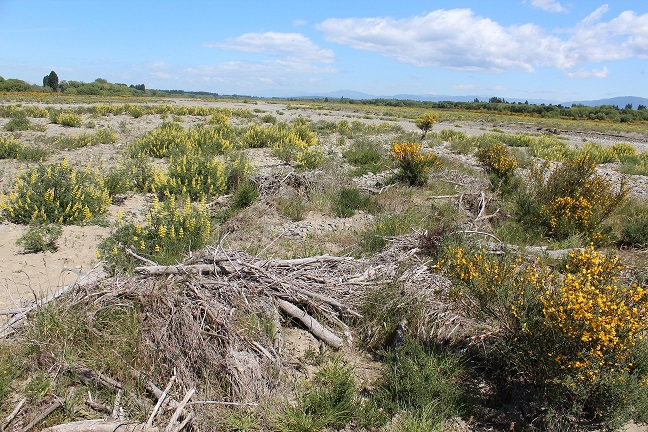
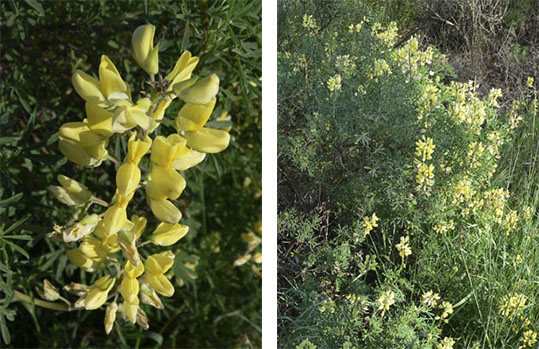
Tree lupin (Lupinus arboreus) is a short-lived, perennial shrub with a deep taproot that grows up to 2-3m high. The stems are densely silky-hairy when young, tough, erect, branching, becoming soft-woody as it grows. The leaves are grey-green, hairless above, silky below, and divided into 5-11 leaflets that spread out finger-like from a single point. The leaflets are 15-40 x 3-10mm. It flowers between October-May and the flowers are pea-like, 15-18mm long, usually pale yellow (rarely white or bluish) and sweetly scented. The seed pod is stout, softly hairy, 40-80mm long, and firmly attached. It splits explosively to disperse dark brown, mottled seeds, 4-6mm long.
See also: NZ Plant Conservation Network
Why is it a problem?
Tree lupin lowers light levels in open habitats including braided rivers. This leads to subsequent invasion by other invasive exotic plants.
Like their relative, the Russell lupin, tree lupin also increases soil nitrogen, and that further increases the chances of invasion by exotic weeds, and degraded and eventually destroys the habitat of native plant communities. This, in turn, causes river gravel to build up, altering the character of braided rivers. The river erodes the edges, creating steep banks. This restricts the water so that instead of braiding, it develops deep, fast-flowing channels, unsuitable for wading birds to feed in.
The dense stands also take over the open spaces where braided river birds like to nest. This is deeply concerning for rare and endangered birds that nest exclusively along braided rivers. Tree lupin also provides cover to predators such as stoats and cats to sneak up on birds.
How does it spread?
- Seeds that fall into the water are carried downstream, allowing the plant to invade new areas
- Sown for sand consolidation and erosion control and as a nursery crop.
- Road workers inadvertently spreading it by using gravel contaminated with seed
Conservation activities
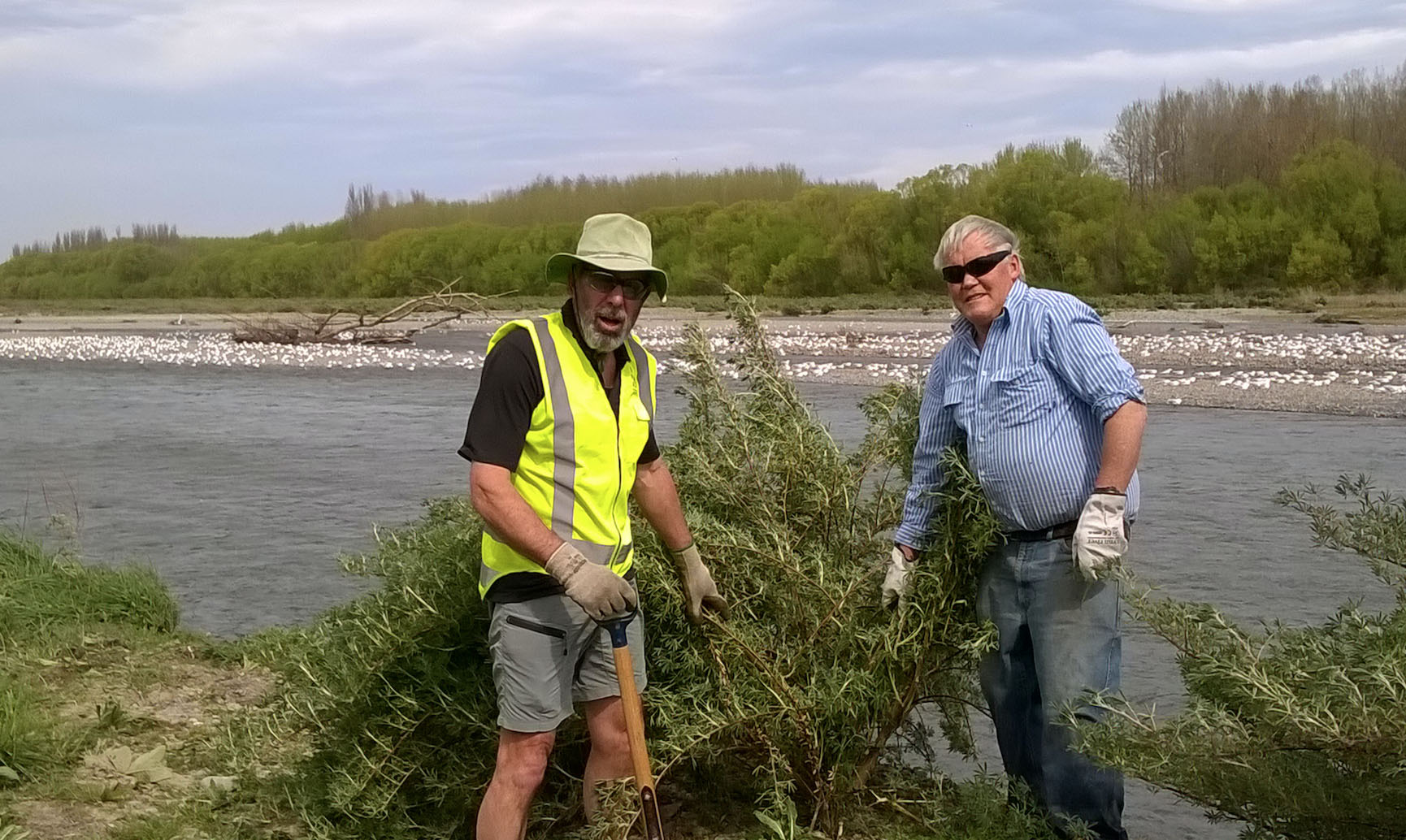
Groups such as the Ashley Rivercare Group run volunteer weeding days in winter, on sections of the river that have played host to braided river birds in previous years. The group, along with the Department of Conservation, are also trialled the use of graders and diggers to remove weeds mechanically.
See also: Weedbusters
Where is it found?
See iNaturalist map or use the mapping tools below for Canterbury.

