
Broom
What does it look like?
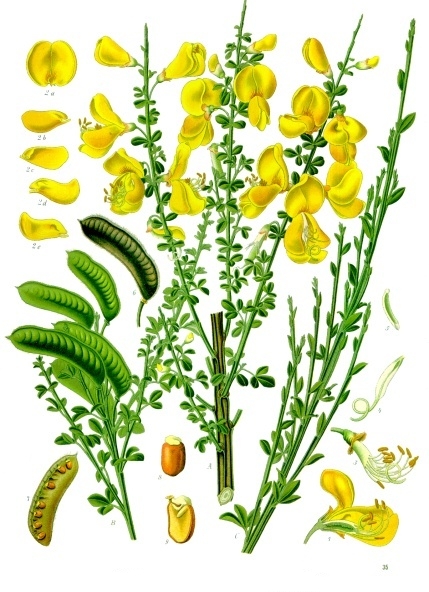
Common Broom (Cytisus scoparius) or Scotch broom is a perennial leguminous shrub native to western and central Europe. It was introduced to New Zealand in the late nineteenth century as an ornamental plant. It typically grows to 1–3m tall, with main stems up to 5cm. The shrubs have green shoots with small deciduous trifoliate leaves 5–15mm long, and in spring and summer (September-December) is covered in profuse golden-yellow flowers 20–30mm from top to bottom and 15–20mm wide. In late summer, its legumes (seed pods) burst open, often with an audible crack, forcibly throwing seed from the parent plant.
Where is it found?
Everywhere. See iNaturalist and select ‘map’ or use the mapping tools below for Canterbury.
Conservation activities
Environment Canterbury list broom as a ‘declared pest’. Being a declared pest means there are specific rules that need to be met within the Canterbury region. Click here to find out more.
- 2019 (ECan): Update of supported projects including weed removal (BRaid seminar)
- Upper Rangitata Landcare Group
- Weedbusters (also has a wide collection of photos)
Why is it a problem?
Broom is a prolific seeder that spreads rapidly, matures quickly, and colonises large areas, forming pure stands that dominate habitats, causing native plants to be excluded. As it is a legume and can fix nitrogen in the soil, it can change the types of plants which can survive where it has been growing, disturbing the ecology of an area and encouraging further weed invasion. Like Russell lupins, broom holds the gravel together, changing the hydrology of the stream so that fast-flowing channels, unsuitable for wading birds to feed in are formed. Broom also take over the open spaces braided river birds need for nesting, and hides introduced predators like cats and stoats.
Unlike many native species, Broom can tolerate a wide range of conditions and temperatures, being tolerant to frost, shade, and drought. It is not controlled by stock as they don’t like the taste.
More information
- Managing weeds (DOC)
- Weedbusters
- Upper Rangitata Landcare Group
- Bioeconomy Science Institute: Biological control agents that have been released to attack broom include:
- Broom seed beetle (Bruchidus villosus)
- Broom psyllid (Arytainilla spartiophila)
- Broom twig miner (Leucoptera spartifoliella)
- Broom shoot moth (Agonopterix assimilella)
- Broom gall mite (Aceria genistae)
- Broom leaf beetle (Gonioctena olivacea)

