
Buddleia / Buddleja / Butterfly bush
What does it look like?
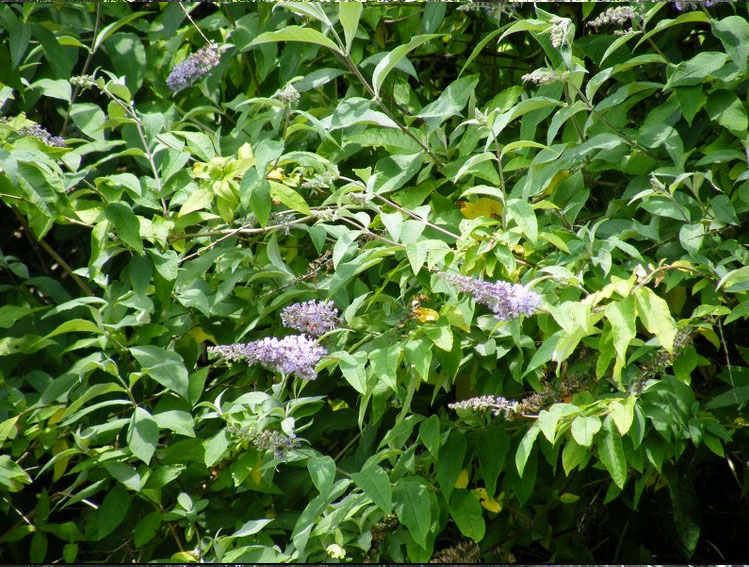
Buddleia (Buddleja davidii) is a deciduous (occasionally semi-evergreen) open, multi-stemmed shrub to 3+ m tall. Stems are bluntly angled, clad in tufts of easily-removed soft woolly hair (downy hairs when young), and become lax when long. Thin, willow-shaped leaves are usually hairless above, white or hairy grey underneath, and finely toothed. In December to February, dense, cone-shaped hanging clusters made up of many fragrant purple or white flowers 5mm in diameter with orange insides are followed by 5-10mm long seed capsules.
See also: NZ Plant Network
Conservation activities
Why is it a problem?
Buddleia establishes and grows quickly, and forms self-replacing thickets. In riverbeds it can alter water flow, causing silt buildup and flooding. Extremely versatile, it tolerates a wide range of (especially poor) soils, hot to cold (likes frost), wet to moderately dry conditions, deep shade or open areas, damage, and wind.
How is it spread?
The seeds can be spread by wind and water.
Where is it found?
See iNaturalist and select ‘map’ or for Canterbury, use the mapping tool below.
References
2019 (ECan): Braided River projects in Canterbury: an update of Environment Canterbury supported projects (page 40).

