Newsletter #107
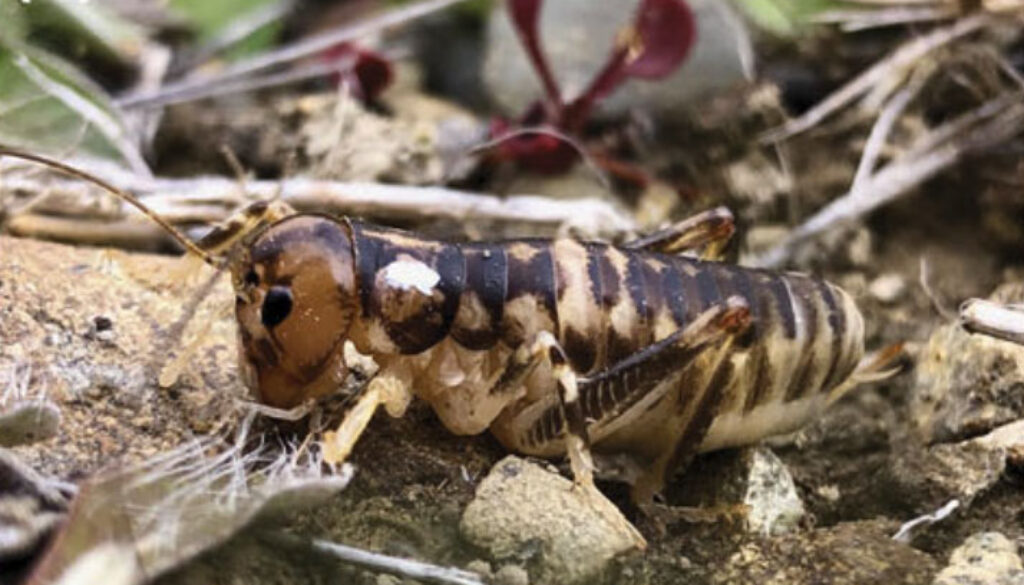
Image: ‘Tekapo’ wētā Hemiandrus fabella Madeline Pye / NZ Journal of Zoology
Tēnā koutou katoa,
Due to conflicting dates for several people, the General Meeting scheduled for 12 February has been postponed until later in the year. The Braided Rivers Conference will be held at Lincoln University Wednesday 08 July 2026. We are inviting expressions of interest (not abstracts at this stage) to present. The committee will be meeting in mid-March to shortlist possible speakers.
In other news, the ‘tekapo’ wētā, one of our braided river invertebrates, now has a formal name: Hemiandrus fabella. You can read all about it in the just published research paper: Five New Species of New Zealand Hemiandrus Ander 1938 Ground wētā (Orthoptera: Anostostomatidae)
And the wonderful letter below is from Dr Anne-Kathryn Schlesselmann (Bioeconomy Science Institute | Maiangi Taiao) on behalf of the author team of their new research article.
Ngā mihi,
Sonny Whitelaw
manager [at] braid. org. nz (yes, I’m trying to defeat spammers by not hotlinking my email)
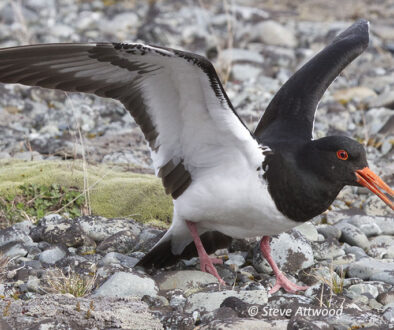
How braided river counts, winter wader counts and resightings help to reveal a long-term decline in South Island Pied oystercatcher | tōrea
For more than 40 years, hundreds of volunteers have been out in all weather—counting, banding, and observing tōrea (South Island pied oystercatchers, Haematopus finschi) across the country. A new study shows just how important these long term observations are, and what they tell us about the future of this endemic migrant.
Every year, breeding adults move between dispersed inland breeding sites mainly in the South Island) to coastal non breeding areas across New Zealand. Younger birds stay coastal year-round. Tracking tōrea population trends isn’t simple, because adults live in such different places across the seasons, and younger age-groups stay coastal year-round. Most datasets only cover certain seasons or age groups, meaning we usually see only part of the story, making it difficult to know how conditions on breeding, wintering grounds and during migration influence the whole population.
In new research, we developed a way to join different seasonal datasets together to build a population model that reflects the annual cycle of the birds. We combined braided river survey, winter wader count, banding and resighting and nest monitoring data collected between 1980 and 2022 and analysed how population growth, survival for different age classes, and productivity have changed over time.
The results show a clear and steady population decline. Over the past 42 years, the tōrea population has been dropping by an average of 1.8% each year. Although the population historically increased after hunting of tōrea was made illegal in the 1940s, the decline over recent decades adds up to a substantial loss. And because of this decline we suggest that tōrea warrant a higher threat classification.
Our research also looked at what conservation actions might help. One key finding is that boosting breeding success alone won’t be enough to halt the decline if survival rates drop any further. In other words, even if more chicks fledge, threats that reduce survival—such as habitat loss—could still push the population downward. Therefore, habitat used across all parts of the annual cycle needs protection and restoration.
This study would not have been possible without the enormous contribution of volunteer observers. Every count, every resighting, and every careful note taken in the field contributed to the long term datasets needed to uncover these trends. The work of many volunteers continues to be essential for understanding and protecting our endemic migrants. Conservation is a long term effort—and thanks to you, we can see the path ahead more clearly than ever.
The research article is available here.
– Anne-Kathryn Schlesselmann (Bioeconomy Science Institute | Maiangi Taiao) on behalf of the author team.

Bird surveys
Please send me [manager @ braid. org. nz] copies of your bird survey reports/datasets so that I can add then to the relevant sections of the website. Please also send copies to Miles Burford at ECan, as Miles updates the braided river bird database.
News/articles
- Predator Free NZ: Sound science: using noise to keep cats away from nesting birds in urban areas
- Predator Free NZ: Predator Free Communities funding round is open until 01 March
- Vote for Bug of the Year
- Toitū Te Whenua Land Information New Zealand: Annual Control Works Programme 2026
- Predator Free NZ: Tips for looking after your traps
- TrapTools NZ: Products include bait protection devices
- The Press: The native fish that foretold a river’s collapse The article focuses on disappearance of Stokell’s smelt and now, the salmon in the Rakaia River.
Research & Reports
- 2026: Trewick & Morgan-Richards, Five New Species of New Zealand Hemiandrus Ander 1938 Ground wētā (Orthoptera: Anostostomatidae), New Zealand Journal of Zoology, February 2026 (open access)
- 2025: Schlesslemann et al; A range-wide full-annual-cycle model informs conservation of a declining migratory shorebird (tōrea (South Island pied oystercatcher, Haematopus finschi).) Journal of Applied Ecology (open access)
- 2025: Weeks et al; Land-use change undermines the stability of avian functional diversity, Nature 649 pp381-387 (open access)
- 2026: Marshall, How did birds evolve? The answer is wilder than anyone thought, Nature news feature