
False tamarisk
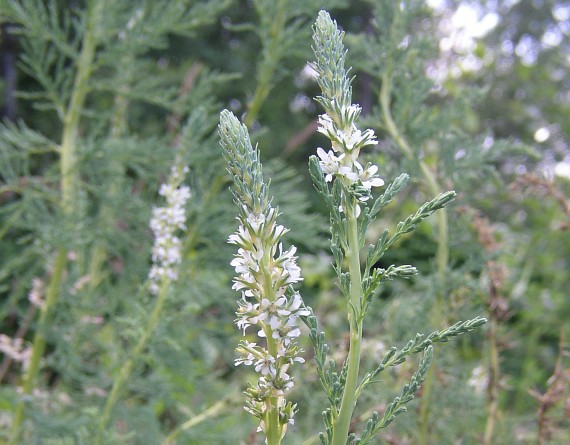
What does it look like?
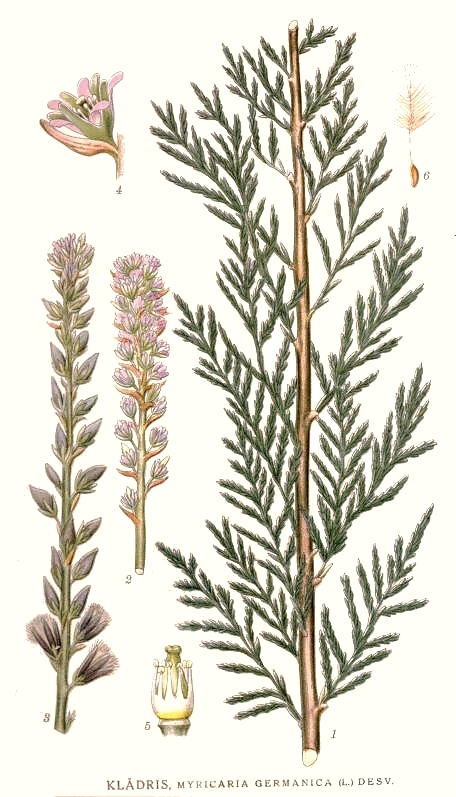
False tamarisk (Myricaria germanica) was accidentally introduced into New Zealand late last century. It is a deciduous shrub growing up to 1.5m that like stony or muddy ground within braided river beds. It has upright branches and small, narrowly triangular leaves (up to 5.5mm x 1.6mm) held close to its branches that appear bluish-green due to salt secretions on the underside. Small, red to pink, 5-petalled (3.2mm) flowers hang in clusters from January, and are followed in February and March by small grey capsules containing seeds (0.7-0.9mm).
How is it spread?
- Wind and water
- Possibly vegetatively
Why is it a problem?
- Has a preference for braided river beds
- Alters the natural environment of stony riverbeds
- Reduces the habitat available for birds that nest in braided riverbeds
- Providing cover for predators
- Tolerates floods, and indeed may thrive in them by spreading
Where is it found?
Prevalent along the lower reaches of the Waimakariri River past the gorge, some upper parts of the Rakaia River, and lower reaches of the Rangitata River mostly downstream from SH1.
See iNaturalist map or for Canterbury, click on the map below,
Conservation activities
- Spray with glyphosate – contact Weedbusters if you see it outside the areas listed in the mapping tool below.
- 2019 (ECan): Update of supported projects including weed removal (BRaid seminar)

