Newsletter #114
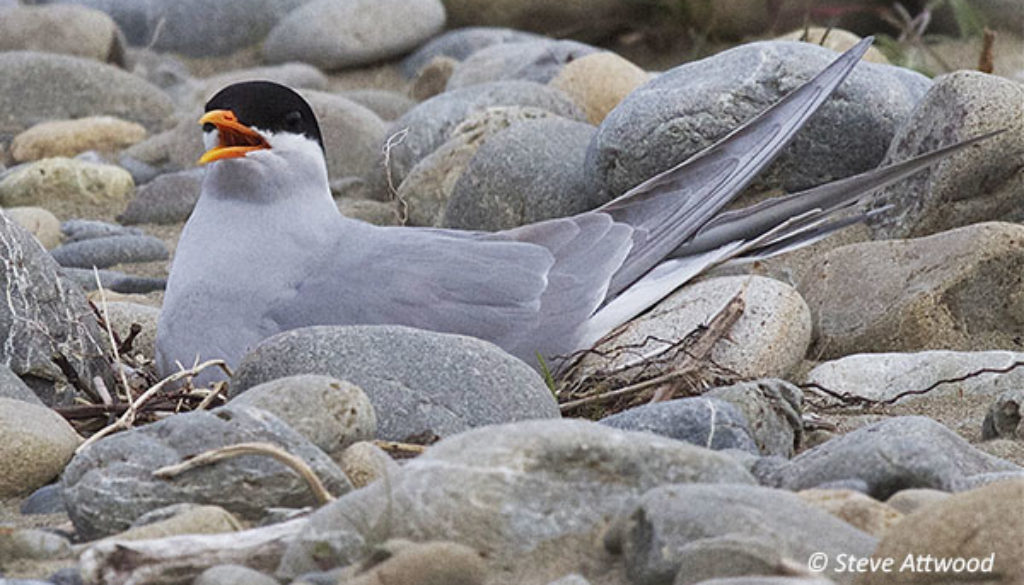
Top image: Vote Black-fronted tern tarapirohe for Bird of the Year 2026
Tēnā koutou katoa,
The next Braid meeting, both the AGM and GM will be on Thursday, 17 September 2026 at 1:00 pm a the DOC office, Ngai Mahi Road, Sockburn. The minutes from the previous meeting 7 November 2025 and the agendas for the GM and AGM are available online at the top of the Member’s Area (you do not need to log in).
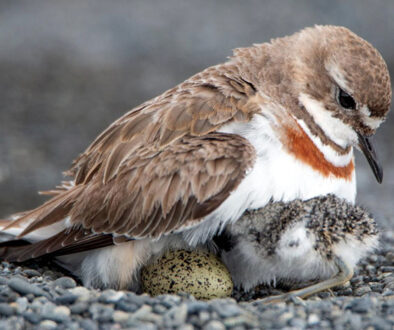
Voting for Bird of the Year will open this Friday. Being an advocate for all braided river birds. This year, there are campaigns to support both black-fronted tern tarapirohe and wrybill ngutuparore. As you can vote for several birds, we urge you to vote for both!
Ngā mihi,
Sonny Whitelaw

Upcoming events
- 4 September – Voting for Bird of the Year commences!
- 14 September – Ashley-Rakahuri River Flood Resilience Project: Presenter: Amy-Grace McIlraith and Sarah Worthington, Environment Canterbury 7-9pm MainPower Stadium Conference Room, Rangiora “The Ashley-Rakahuri flood resilience project aims to protect $6.8 billion of national assets and improve flood resilience for the Rangiora, Kaiapoi and Southbrook townships. Sarah and Amy will also speak on braided river revival, berm transition and other regional strategies.”
- 15 September – Maunga to Motu; Embracing the Waimatā Awa Presenter Nicki Davies (Gisborne District Council). “This presentation showcases the development of a nature-based solutions (NBS) modelling toolbox to support land use and flood resilience decision-making …” 12 midday Webinar
- 17 September – BRaid Inc. AGM and GM, 1pm the DOC office, Ngai Mahi Road, Sockburn.
- 24 September – SAFER: From Improved Situational Awareness to Flood Forecasting and Emergency Response “SAFER (Service for Advanced Flood Emergency Response) is an action-research initiative developing a practical framework for improved flood forecasting, situational awareness and emergency response. This webinar will showcase progress to date, including the five stages and 4 tiers of SAFER.” 12 midday Webinar.
- 27 September – Celebrating World Rivers Day Ōtautahi Christchurch The Band Rotunda, Cambridge Terrace, 10:00am – 2:00pm. Any groups wanting a stall at this event, contact kiaora@avonotakaronetwork.org.
- 20 October – Understanding and Modelling River Behaviour Workshop, River Managers’ Professional Development Programme Ōtautahi Christchurch 9:00 AM – 5:00 PM Cost: $800 + GST. This workshop provides a practical introduction to river behaviour and modelling, combining theory, case studies, and real-world examples to build confidence in interpreting river processes and assessing model outputs. This workshop is ideal for river managers, engineers, planners, scientists, consultants, and anyone involved in river management, flood risk, or river modelling projects. Register and more information.
Reports & research papers
- 2026: Schlesselmann et al; Analysis of braided river bird count data from the Waiau Uwha and Waimakariri Rivers, Bioeconomy Science Institute Maiangi Taiao for ECan
- 2026: Burford: Analysis of braided river bird count data from the Waimakariri and Waiau Uwha Rivers ; PDF of a presentation at the Terrestrial Ecology Forum meeting of regional council ecologists 20 August
Frances Schmechel summarised the outcomes: Miles Burford ran us through the research ECan has been doing to map braided river birds and tracking the populations on the Waiau Uwha and Waimakariri Rivers. The data has been collected since the mid 1960s and was recently assessed by Bioeconomy Science Institute for ECan; see Schlesselmann et al 2026.
On the Waiau Uwha there is strong evidence for moderate declines in māpunga/black shag, tarapirohe/black-fronted tern, and tōrea/South Island pied oystercatcher; and shallow declines in Tarāpuka/black-billed gull and tūturiwhatu/banded dotterel.
On the Waimakariri there is strong evidence for a rapid decline in grey duck-mallard hybrids, but this might be a result of variation between observers. Māpunga/black shag have also shown a rapid decline, but the evidence is weak.
Given that various councils monitor river birds, there is an opportunity to collaborate to look at how their populations may be changing nationally.
You can access and use the braided river bird database here.