Newsletter #110
Tēnā koutou katoa,
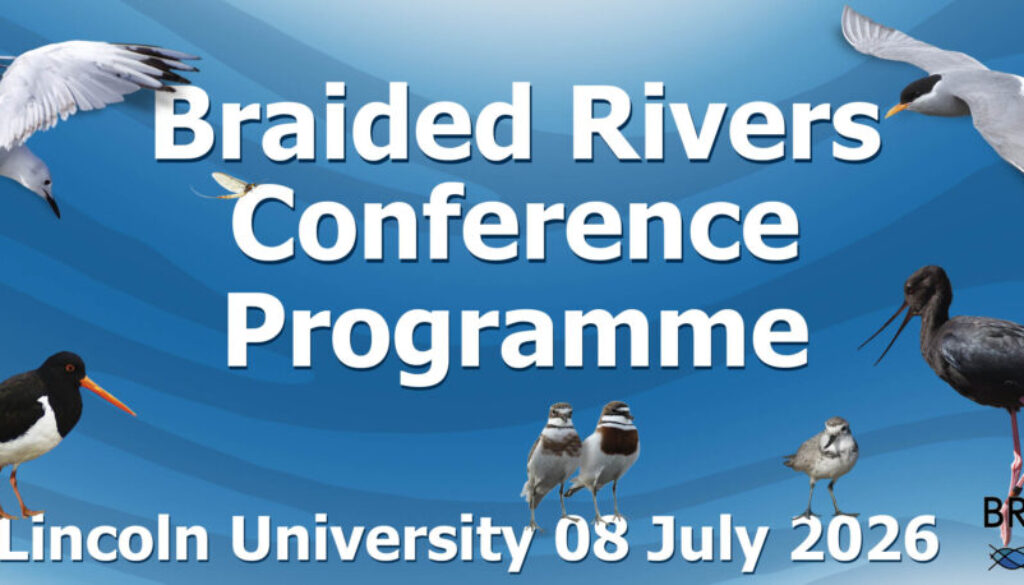
Reminder: the annual Braided Rivers Conference, will be held at Lincoln University Wednesday 08 July, 2026. We have been able to keep the cost to a modest $49.00 per person in large part due to funding from the Waitaha Action to Impact Fund and a donation from artist Iain Cheeseman. Lunch, morning, and afternoon teas are included, and there is plenty of free parking at the venue (see the map). I look forward to seeing you there. Booking is essential (deadline is 02 July)
Those of you attended the workshop on the next National Climate Change Risk Assessment report at the Adaptation Conference in Ōtautahi Christchurch October last year, will be familiar with the eye-popping shortfalls in policy readiness when it comes to risks to our freshwater ecosystems. Now that the full report has been published, you may want to fortify yourself with a stiff drink before diving in. The news is not good. Of the 37 domains, all but 5 have ‘major’ to ‘extreme’ shortfalls in policy readiness. The full report is here. The 3-page summary (PDF) is here.
Ngā mihi,
Sonny Whitelaw
News/articles
- New Zealand Bird Conference: 30th May to 1st June, Wānaka
- Te Punaha Matatini: (job) Postdoctoral fellowship in ecology and data science, Centre for Sustainability Research Kā Rakahau o te Ao Tūroa University of Otago Ōtakou Whakaihu Waka
- Newsroom: On the trail of super-killer hedgehogs and cats high in our alpine wonderland
- Scimex: Siren song of female rats helps lure rodents into traps
- Environmental Weed Coalition: webinars on YouTube
- Scimex: New study finds support for feral cat control among Māori
- Science: ‘Invisible’ birds spotted with thermal imaging “Approach could help reveal which migrating species are most vulnerable to wind turbines and light pollution.”
- The Guardian: ‘How much have we missed?’: book tunes in to overlooked world of female birdsong “The authors set out to correct under-representation of female sounds – and found some surprising revelations.”
- Nature: The air is full of DNA — here’s what scientists are using it for “Airborne genetic material can be used to paint a picture of ecosystem health, watch for invasive species and even identify humans.”
- Nature: Birds get a bad rap: why we should look up to our feathered friends
- Newsroom: Pest control is the new Neighbourhood Watch “Killing pests helps restore the environment but it is also having a positive social impact as more communities embrace the backyard trapping boom.”
- Scimex: Native grasshoppers munch on invasive weeds “The flightless and silent grasshoppers of the Southern Alps could be keeping mountain weeds under control.”
- Radio NZ: De-extinction breakthrough or over-egged hype? Colossal Biosciences announce their first steps towards ‘de-extincting’ the moa – successfully hatching chickens from an artificial egg. Also see the commentary in the journal Nature. and article in The Conversation.
Reports & research papers
- Environment Canterbury: Bird Island Annual Report (April 2026)
- Keystone ecology: Rakitata River Braided River Bird Monitoring 2025-26 Season Report (compressed file to 5Mb so images may not be sharp)
- Nature Ecology & Evolution: (open access ): Land vertebrates increasingly exposed to multiple extreme events by 2085
- Torea Consulting: Review of Bird Monitoring undertaken on the Mid Waimakariri River. Contract report to Environment Canterbury 2026
- National Climate Change Risk Assessment 2026: skip to page 63: Natural Environment. It doesn’t look good.
- Nature: (open access): More concentrated precipitation decreases terrestrial water storage, 13 May 2026
- Nature Geoscience (open access) Reshaping river flow 13 May 2026