Newsletter #113
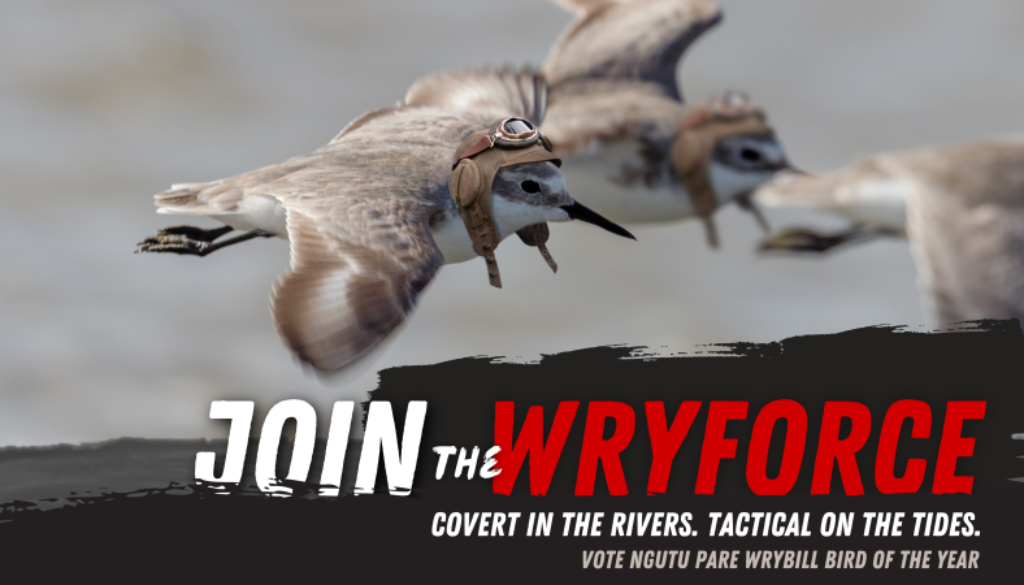
Top image: Vote ngutu pare wrybill, Bird of the Year 2026
Tēnā koutou katoa,
The next Braid meeting, both the AGM and GM will be on Thursday, 17 September 2026 at 1:00 pm a the DOC office, Ngai Mahi Road, Sockburn. The minutes from the previous meeting 7 November 2025 are available online (you do not have to log in). We’ll also be sending these and the agenda for this year’s meetings to members, a week or so ahead of time.
Keith Woodley from the Pūkorokoro Shorebird Centre emailed me this morning and I noticed a variation of the above image in the footer of his email. If you are reading this newsletter online, you’ll see that I have already begun campaigning for this year’s Bird of the Year.
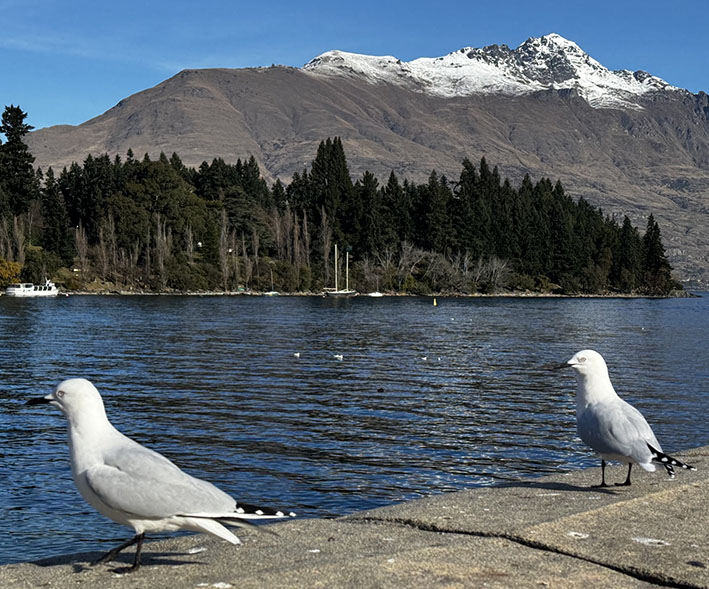
The photo below is one that I took while in Queenstown on Thursday. Tarāpuku have set up shop on the seawall, waiting not-so patiently for people eating waffle-coned ice creams to toss them a few tidbits. A pity there are no signs around explaining that Tarāpuku are not seagulls, something even one of the jetboat operators I spoke too had no knowledge of.
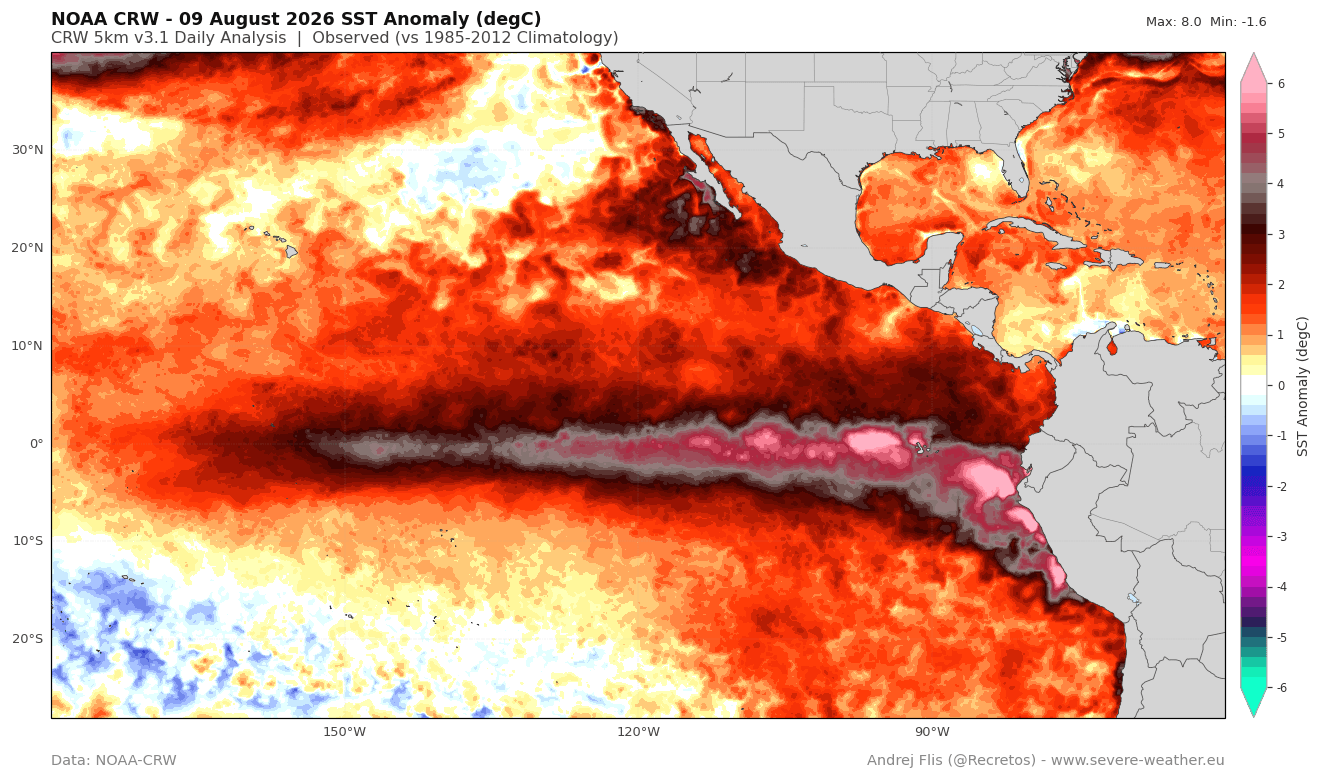
Before going to Queenstown, I attended a National Emergency Management meeting called in anticipation of what is shaping up to be an historic El Niño. While you’re out and about this season, photographing, counting birds, checking traps, or clearing weeds in rivers and around estuaries and hāpua, pay extra attention to the weather forecast. Generally speaking El Niños lead to more rainfall in the mountains, triggering high water flows in alpine-fed rivers. In contrast, foothill-fed rivers on the east coast of Te Waipounamu often dry up and drought conditions prevail.
But no two El Niños are alike. And this one is extreme. Seriously. It’s not often you see the journal Nature use terms like ‘largest on record by a ‘mind-blowing margin’ (see latest at the end of this newsletter). If you’re in Canterbury, keep an eye on river flow data on the ECan website or sign up for their free flood alert text messaging service. Several other regional councils natural hazard portals that I checked have lengthy disclaimers, so the Met Service website may be more reliable. While that may seem obvious it’s worth repeating: this El Niño is historic.
For those organising bird counts or other activities in the coming months, let me know and I’ll add the information to the next newsletter.
Ngā mihi,
Sonny Whitelaw
Upcoming events
- 26 August – Aparima River project: combining gravel extraction with braided river restoration. Presenter: Clement Lagrue, Senior Science Advisor with New Zealand’s Department of Conservation (DOC). Register here.
- 31 August – Fish, friends and their freshwater habitats. Join Sophie Allen, a freshwater ecologist, for a tour beneath the surface of Waimakariri’s rivers and wetlands from 7-9pm MainPower Stadium Conference Room, Rangiora “What is a kanakana, and where would you find one? Which plants are important for whitebait and why?”
- 02-03 September – Endangered Species National Hui, Kirikiriroa Hamilton. “This two-day national hui brings together iwi, communities, scientists, creatives and advocates to connect, collaborate and act on our shared responsibilities to te taiao.” Programme and tickets.
- 14 September – Ashley-Rakahuri River Flood Resilience Project: Presenter: Amy-Grace McIlraith and Sarah Worthington, Environment Canterbury 7-9pm MainPower Stadium Conference Room, Rangiora “The Ashley-Rakahuri flood resilience project aims to protect $6.8 billion of national assets and improve flood resilience for the Rangiora, Kaiapoi and Southbrook townships. Sarah and Amy will also speak on braided river revival, berm transition and other regional strategies.”
- 15 September – Maunga to Motu; Embracing the Waimatā Awa Presenter Nicki Davies (Gisborne District Council). “This presentation showcases the development of a nature-based solutions (NBS) modelling toolbox to support land use and flood resilience decision-making …” 12 midday Webinar
- 17 September – BRaid Inc. AGM and GM, 1pm the DOC office, Ngai Mahi Road, Sockburn.
- 24 September – SAFER: From Improved Situational Awareness to Flood Forecasting and Emergency Response “SAFER (Service for Advanced Flood Emergency Response) is an action-research initiative developing a practical framework for improved flood forecasting, situational awareness and emergency response. This webinar will showcase progress to date, including the five stages and 4 tiers of SAFER.” 12 midday Webinar.
- 27 September – Celebrating World Rivers Day Ōtautahi Christchurch – The Band Rotunda, Cambridge Terrace, 10:00am – 2:00pm. Any groups wanting a stall at this event, contact kiaora@avonotakaronetwork.org.
Reports & research papers
- Hakatere/ Ashburton River control and monitoring plan for Karoro/Southern Black-backed Gull (Torea Consulting for ECan)
- Ashburton Rivermouth Hapua Bird Monitoring Report April 2025 – March 2026 (Andrew Crossland for ECan)
- An instance of anti-predator behaviour in black-fronted terns towards an invasive mammalian predator, Birds New Zealand 73 | 2 pp234-237
- Timing and duration of primary moult in adult variable oystercatchers (Haematopus unicolor) in the Auckland region, New Zealand, Birds New Zealand 73 | 2 pp199-205
- Validating a rapid algorithmic weed hazard ranking method, Pest Science Management 82 | 1 pp375-383
News/articles
- Quanta: Why Are Rivers So Mathematical? “A simple scaling law brings order to the chaos of flowing water, rock, and sediment. New findings have extended the law even further.”
- Interest: IAG NZ warns it may have to withdraw insurance from NZ’s flood-prone areas in the future if the Government doesn’t speed up natural hazard risk reduction.
- Nature (open access article): This El Niño is set to be the largest on record by a ‘mind-blowing margin’. Note: this was published 23 July. The latest data (09 August) suggests worse: