Newsletter #115
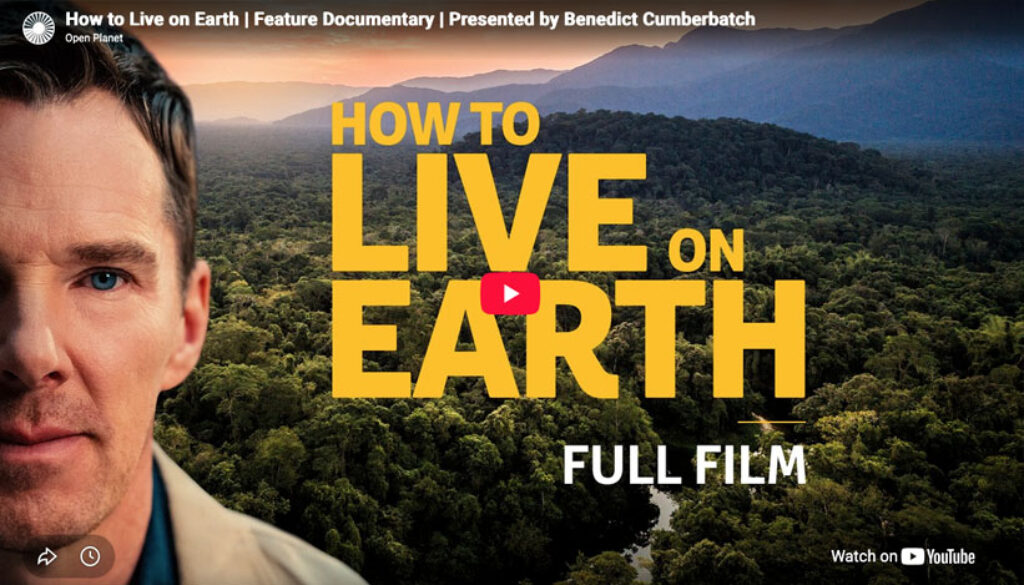
Top image: How to Live on Earth documentary
Tēnā koutou katoa,
Congratulations to this year’s winner of Bird of the Year: karure black robin. While none of the braided river birds reached the top five this year, that just spurs us on for the 2027 Bird of the Year competition!
Our General and Annual General Meetings were held last Thursday 17 September 2026. The minutes and annual financial report to 31 July is available on the Members’ webpage; you do not need a password.
At the Braided Rivers Conference in June this year, considerable concern was raised about the Government’s planned abolishment of regional councils, with no public consultation. Almost 64% of Aotearoa’s braided rivers are in Waitaha Canterbury, with a catchment of over 164,170ha. As discussed at the Conference, BRaid has drafted a document outlining the environmental and governance risks that should be carefully considered before any changes are made. You are welcome to download and use the contents of this Word document, in whole or part, if you or your organisation wish to advocate for maintaining ECan and regional councils.
Just as I was preparing to send this newsletter last night, I had word that I wouldn’t have to wait for the documentary film How to Live on Earth presented by Benedict Cumberbatch, to arrive in movie theatres. Instead, the producers loaded it, ad-free, to Youtube. This is an exceptional documentary; honesty framed by moments of deep sadness, but equally uplifting as a First Nations’ tribe works to save its river. I’ve embedded the video at the end of this newsletter.
Lastly, if you are organising a bird count this season and need volunteers, please let me know and I’ll include the details in our next newsletter.
Ngā mihi,
Sonny Whitelaw
News
- Rakitata River to become a ‘living laboratory’ for UC researchers “DOC is partnering with the University of Canterbury to offer four scholarships to support research in the Rakitata River that will address real conservation and river management issues. The topics cover river health, native species, invasive pests and the effectiveness of restoration work.” See what else is happening in the Rakitata and sign up for the Rakitata River Revival community newsletter
- Te Manahuna Aoraki Project Spring Update 2026
- Satellite reveals a world of ‘weird rivers’ shaped by humans; SWOT is exposing humans’ effects on rivers—and challenging flood prediction models – Science Weekly.
- The world’s rivers are at breaking point. Can we save them before it is too late? The Guardian launches a year-long project, Our Rivers, to take stock of the issues facing waterways around the world.
Upcoming events including bird survey
- 24 September – Invitation to explore the river with a highly visual presentation with the Ashley Rivercare Group. RSA, Victoria St, Rangiora in the Kippenberger Function Room 1, 7-9pm. Supper included.
- 27 September – Celebrating World Rivers Day Ōtautahi Christchurch The Band Rotunda, Cambridge Terrace, 10:00am – 2:00pm. Any groups wanting a stall at this event, contact kiaora@avonotakaronetwork.org.
- 20-21 October – Ashburton River Bird Survey (backup dates 1-2 December). A 5 -10km walk depending which part of the river you are on; it’s generally a full day adventure where you will get wet feet, possibly to above knees. Please contact Donna Field for more details.
- 20 October – Understanding and Modelling River Behaviour Workshop, River Managers’ Professional Development Programme Ōtautahi Christchurch 9:00 AM – 5:00 PM Cost: $800 + GST. This workshop provides a practical introduction to river behaviour and modelling, combining theory, case studies, and real-world examples to build confidence in interpreting river processes and assessing model outputs. This workshop is ideal for river managers, engineers, planners, scientists, consultants, and anyone involved in river management, flood risk, or river modelling projects. Register and more information.
Reports & research papers
- 2026: Rogers et al; Sediment transport capacity in a large braided river: integrating substrate mapping with flow scenarios EGUsphere pre-print “We have developed an efficient way of considering how large braided rivers move and store sediment over large areas by combining detailed riverbed maps with simplified flow models.”
- 2026: Wang et al; Climate warming drives thermal shocks and accelerated freshwater habitat fragmentation, Nature Climate Change 16 (open access)